Prayers for the Rosary
The Mysteries of the Rosary
The Joyful Mysteries
(Mondays and Thursdays; Sundays of Advent.)- The Annunciation: Mary learns from the Angel Gabriel that God wishes her to be the mother of God and humbly accepts. (Luke 1:26-38)
- The Visitation: Mary goes to visit her cousin Elizabeth and is praised by her as “blessed among women.” (Luke 1:39-56)
- The Nativity: Mary gives birth to Jesus in the stable at Bethlehem. (Luke 2:1-20)
- The Presentation: Mary and Joseph present Jesus to His Heavenly Father in the Temple of Jerusalem forty days after His birth. (Luke 2:22-39)
- The Finding in the Temple: After searching for three days, Mary and Joseph find the twelve-year-old Jesus sitting in the Temple discussing the law with the learned doctors. (Luke 2:42-52)
The Sorrowful Mysteries
(Tuesdays and Fridays; Sundays of Lent.)
- The Agony in the Garden: The thought of our sins and His coming suffering causes the agonizing Savior to sweat blood (hematidrosis). (Luke 22:39-44)
- The Scourging: Jesus is stripped and unmercifully scourged until His body is one mass of bloody wounds. (Matt. 27:26)
- The Crowning with Thorns: Jesus’s claim to kingship is ridiculed by putting a crown of thorns on His head and a reed in His hand. (Matt. 27:28- 31)
- The Carrying of the Cross: Jesus shoulders His own cross and carries it to the place of crucifixion while Mary follows Him sorrowing. (Luke 23:26- 32)
- The Crucifixion: Jesus is nailed to the cross and dies after three hours of agony witnessed by His Mother. (Matt. 27:33-50)
The Glorious Mysteries
(Sundays except during Advent and Lent, Wednesdays and Saturdays.)
- The Resurrection: Jesus rises from the dead on Easter Sunday, glorious and immortal, as He has predicted. (Matt. 28:1-7)
- The Ascension: Jesus ascends into Heaven forty days after His resurrection to sit at the right hand of God the Father. (Luke 24:50-51)
- The Descent of the Holy Spirit: Jesus sends the Holy Spirit in the form of fiery tongues on His Apostles and disciples. (Acts 2:2-4)
- The Assumption: Mary, having completed the course of her earthly life, is assumed body and soul into heavenly glory.
- The Coronation: Mary is crowned as Queen of heaven and earth, Queen of angels and saints.
The Luminous Mysteries
(Thursday.)
- The Baptism in the Jordan: The heavens open, the Spirit descends like a dove, and the Father proclaims Jesus as His beloved Son. (Matthew 3:13-17)
- The Wedding at Cana: Jesus performs His first miracle by turning water into wine at a wedding, revealing His divine power. (John 2:1-12)
- The Proclamation of the Kingdom: Jesus calls for repentance and belief, announcing the nearness of God’s Kingdom. (Mark 1:14-15)
- The Transfiguration: Jesus is transfigured on a mountain, revealing His divine glory to Peter, James, and John. (Matthew 17:1-9)
- The Institution of the Eucharist: During the Last Supper, Jesus establishes the Eucharist, offering His body and blood to His disciples. (Mark 14:22-25)
How We Pray the Rosary
It takes around 20 minutes to pray the rosary. This powerful set of prayers allows us to meditate on Scripture and the key moments during Jesus’ life.
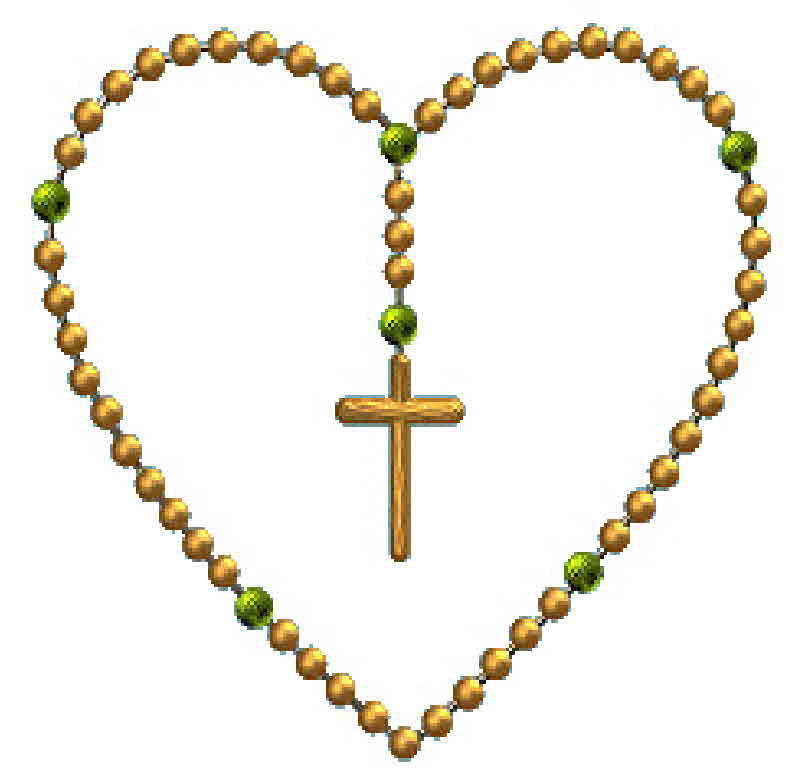
The rosary consists of a crucifix, beads, and a medal, with specific prayers for each of these elements. The prayers of the rosary can be divided into three general groups:
We use the rosary to pray to God through the intercession of The Virgin Mary, With the prayers of the rosary, we ask Mary to pray for us and to guide us by the example of her son, Jesus.
Introductory Rosary Prayers The introductory prayers prepare for deep reflection. Think of any needs or struggles in our lives and bring them to Mary. She cares for you like a loving mother, and wants to take your needs to Jesus. When praying in a group setting, one can say their intentions out loud so the rest of the group can pray for them as well.
The Decades As we pray the decades, we also meditate on the mysteries of the rosary and learn valuable lessons from the lives of Jesus and Mary. Traditionally we reflect on specific mysteries each day of the week. The prayers for each decade are repeated many times. These words are deeply rooted in the Bible and Christian tradition and can serve as a powerful meditation.
Closing Rosary Prayers The closing prayers are prayed on the medal. With these prayers we ask God and Mary to watch over us, guide us, and help us become a-better-person.
The rosary consists of a crucifix, beads, and a medal, with specific prayers for each of these elements. The prayers of the rosary can be divided into three general groups:
- The Introductory Rosery Prayers
- The Decade Prayers
- The Closing Rosery Prayers
We use the rosary to pray to God through the intercession of The Virgin Mary, With the prayers of the rosary, we ask Mary to pray for us and to guide us by the example of her son, Jesus.
Introductory Rosary Prayers The introductory prayers prepare for deep reflection. Think of any needs or struggles in our lives and bring them to Mary. She cares for you like a loving mother, and wants to take your needs to Jesus. When praying in a group setting, one can say their intentions out loud so the rest of the group can pray for them as well.
- While holding the crucifix, we make the Sign of the Cross and then pray the Apostles’ Creed. The Apostles’ Creed is a brief summary of the core beliefs of our faith.
- On the first large bead, we pray the Our Father, a prayer given to us by Jesus in the sixth chapter of Matthew’s Gospel.
- On the next three small beads, we pray the Hail Mary. This prayer is based on words spoken by Mary’s cousin, Elizabeth, in Luke’s Gospel. On the first bead, we pray for faith in God, on the next bead we pray for hope, and on the third bead we pray for love.
- After the third Hail Mary, we pray the Glory Be, a simple expression of praise and belief in the Trinity (Father, Son, and Holy Spirit).
- Once we’ve prayed these introductory prayers, we begin the first of five decades.
The Decades As we pray the decades, we also meditate on the mysteries of the rosary and learn valuable lessons from the lives of Jesus and Mary. Traditionally we reflect on specific mysteries each day of the week. The prayers for each decade are repeated many times. These words are deeply rooted in the Bible and Christian tradition and can serve as a powerful meditation.
- On the large bead, we announce the mystery and pray the Our Father.
- On each small beads in the decade, we pray the Hail Mary.
- On the 10th small bead, we also pray the Glory Be and the Fatima Prayer. The Fatima Prayer was revealed to three shepherd children in Fatima, Portugal, in 1917).
Closing Rosary Prayers The closing prayers are prayed on the medal. With these prayers we ask God and Mary to watch over us, guide us, and help us become a-better-person.
- We pray the Hail, Holy Queen (a prayer asking for Mary’s help)
- Next, we pray the Rosary Prayer (a prayer of hope that our lives will be changed by the rosary).
- Additional closing prayers are sometimes said at this time.
- Conclude the Rosary by holding the crucifix and, making the Sign of the Cross.